


Introduction
Modern software systems have become increasingly complex. Organizations now manage cloud infrastructure, microservices architectures, CI/CD pipelines, container orchestration platforms, and distributed systems simultaneously.
To address this complexity, many technology companies are adopting a new discipline called platform engineering.
Platform engineering focuses on building internal platforms that simplify infrastructure and tooling for development teams. Instead of every team managing infrastructure independently, organizations create standardized platforms that enable developers to build, deploy, and operate software more efficiently.
This approach significantly improves developer productivity, operational consistency, and system scalability.
What Is Platform Engineering?
Platform engineering is the practice of designing and maintaining internal developer platforms (IDPs) that provide reusable infrastructure and tools for software teams.
These platforms typically include:
automated deployment pipelines
container orchestration platforms
cloud infrastructure management
monitoring and observability tools
developer self-service portals
By centralizing these capabilities, platform teams allow developers to focus primarily on building product features instead of managing infrastructure.
Why Platform Engineering Is Growing Rapidly
Many organizations initially adopted DevOps to improve collaboration between development and operations teams. However, as systems grew more complex, DevOps practices alone were not always enough.
Platform engineering emerged as the next evolution by providing structured infrastructure platforms designed specifically for developers.
Key drivers behind this trend include:
Increasing System Complexity
Modern applications rely on distributed architectures involving cloud services, APIs, containers, and microservices.
Platform engineering simplifies these environments.
Developer Productivity
Engineers spend a significant amount of time managing infrastructure tasks.
Internal platforms automate these processes and allow developers to focus on building software.
Standardization
Organizations benefit from consistent infrastructure standards across all development teams.
Platform engineering ensures tools, security policies, and deployment processes remain consistent.
Key Components of Platform Engineering
Successful platform engineering initiatives usually include several important components.
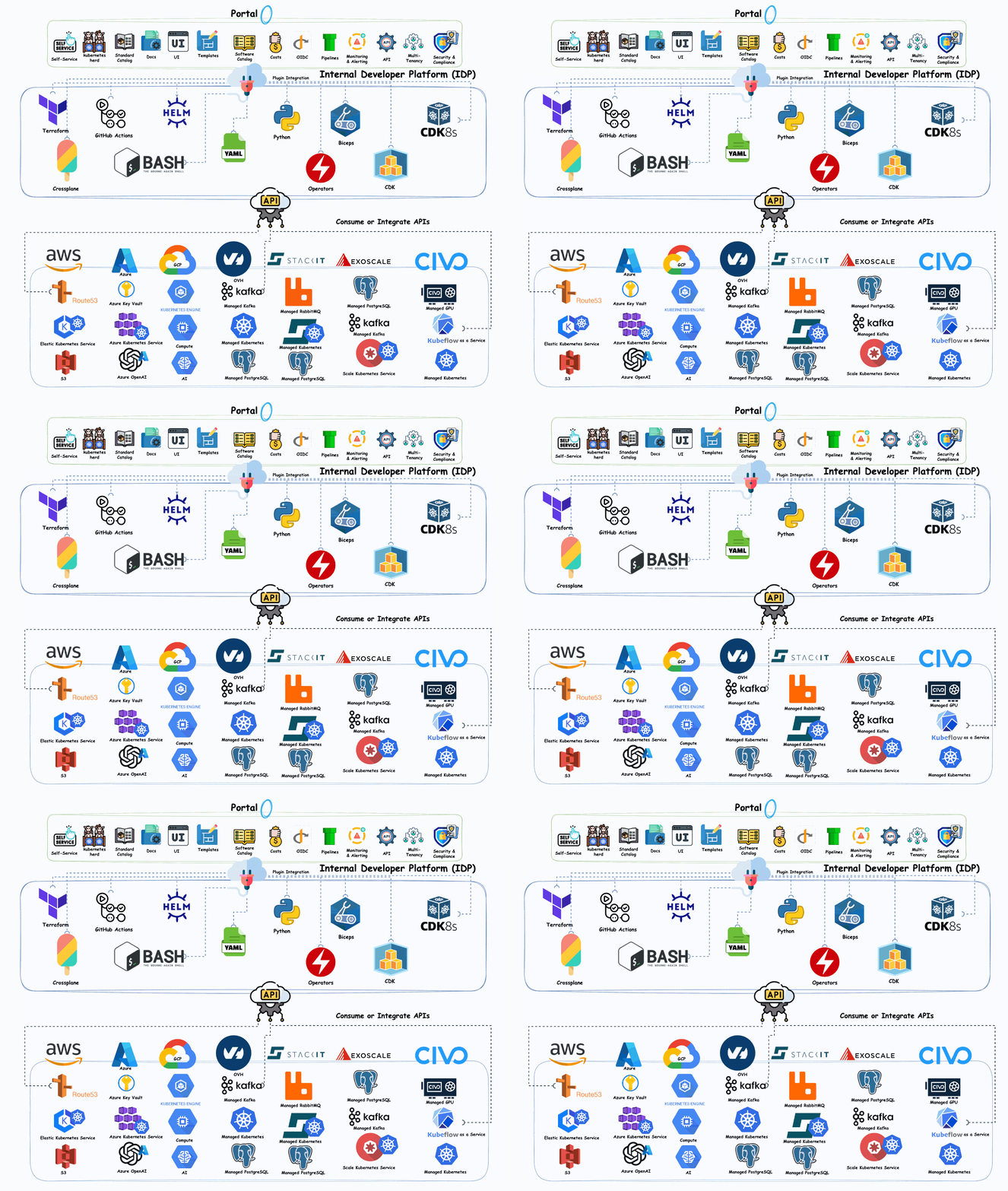
Internal Developer Platform (IDP)
An internal developer platform provides a centralized interface where developers can:
deploy applications
manage services
access infrastructure
monitor system performance
This self-service environment significantly reduces operational friction.
Infrastructure as Code
Infrastructure as Code (IaC) allows organizations to manage infrastructure using code-based configurations.
Tools such as Terraform and cloud-native services allow infrastructure to be automated, versioned, and replicated easily.
Container Orchestration
Container orchestration platforms help manage containerized applications across distributed environments.
These systems handle:
container deployment
scaling
load balancing
service discovery
This enables organizations to run applications reliably across multiple environments.
Benefits of Platform Engineering
Organizations implementing platform engineering typically experience several key benefits.
Faster Development Cycles
Developers can launch services quickly using pre-configured infrastructure templates.
Improved Reliability
Standardized environments reduce configuration errors and deployment issues.
Enhanced Security
Centralized platforms allow security policies to be implemented consistently across all systems.
Scalability
Platform architectures are designed to support large-scale applications and growing user bases.
Platform Engineering vs DevOps
Platform engineering does not replace DevOps but rather builds upon it.
DevOps focuses on collaboration and automation across development and operations teams, while platform engineering focuses on creating internal platforms that make DevOps practices easier to implement.
In many organizations today, platform engineering teams support DevOps by providing infrastructure platforms used by development teams.
The Future of Platform Engineering
Platform engineering is expected to play a central role in the future of software development.
As organizations continue to adopt cloud-native architectures and distributed systems, internal platforms will become essential for managing complexity.
Companies investing in platform engineering are likely to achieve:
faster software delivery
improved developer experience
stronger infrastructure reliability
better operational scalability
For technology-driven businesses, platform engineering is becoming a strategic capability for long-term innovation.