


Introduction
As digital platforms grow and user demand increases, building scalable and reliable systems has become one of the most important challenges in modern software engineering. This is where system design plays a crucial role.
System design focuses on architecting software systems that can handle large amounts of traffic, data, and complexity while maintaining performance and reliability.
From global streaming platforms to large-scale enterprise applications, every successful product relies on strong system design principles.
Understanding these principles allows organizations to build platforms that are not only functional but also scalable, maintainable, and resilient.
What Is System Design?
System design is the process of defining the architecture, components, modules, interfaces, and data flow of a software system.
It involves planning how different parts of a system interact and how they work together to achieve specific goals such as performance, scalability, and reliability.
A well-designed system considers multiple aspects including:
system architecture
database design
scalability strategy
fault tolerance
security
performance optimization
The objective is to create systems that can grow and adapt without major redesign.
Core Principles of System Design
Successful systems are built around several key principles.
Scalability
Scalability refers to the system’s ability to handle increasing workloads without performance degradation.
This is often achieved through techniques such as:
horizontal scaling
load balancing
distributed computing
Modern cloud platforms make scalability more achievable by allowing systems to expand dynamically based on demand.
Reliability
Reliability ensures that the system continues to function even when failures occur.
Techniques used to achieve reliability include:
redundancy
failover systems
monitoring and alerting
automated recovery mechanisms
Highly reliable systems are designed with the assumption that failures are inevitable.
Performance
Performance focuses on ensuring that the system responds quickly and efficiently to user requests.
Key strategies include:
caching frequently accessed data
optimizing database queries
reducing latency in network communication
High-performance systems are essential for delivering smooth user experiences.
Key Components in Modern System Architecture
Modern distributed systems typically include several architectural components working together.
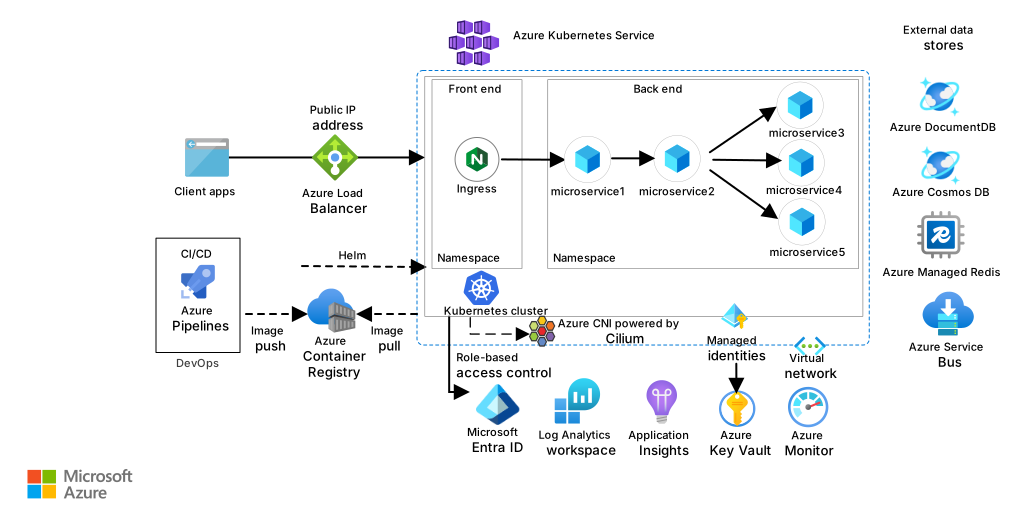
API Gateway
An API gateway acts as the entry point for client requests, routing them to appropriate services and handling tasks such as authentication and rate limiting.
Microservices
Instead of building a single large application, many modern systems use microservices architecture, where functionality is split into smaller independent services.
This allows teams to:
deploy features independently
scale services individually
improve system flexibility
Databases and Data Storage

Choosing the right data storage system is a critical design decision.
Common database options include:
relational databases
NoSQL databases
distributed storage systems
Each option provides different advantages depending on the application's requirements.
Observability and Monitoring
Monitoring and observability are essential for maintaining large systems.
Modern platforms use tools that provide visibility into:
system metrics
logs
performance indicators
error tracking
These insights allow engineering teams to identify and resolve issues quickly.
The Role of Cloud Infrastructure
Cloud platforms have significantly simplified system design by providing scalable infrastructure and managed services.
Organizations can now build complex systems using cloud technologies such as:
container orchestration
serverless computing
distributed databases
content delivery networks
These tools allow teams to focus more on innovation and less on infrastructure management.
Conclusion
System design is the foundation of modern software architecture. By carefully designing systems with scalability, reliability, and performance in mind, organizations can build platforms that support millions of users and large-scale operations.
As technology continues to evolve, system design will remain a critical discipline for engineers and technology leaders.
Companies that invest in strong architecture practices are better positioned to deliver reliable digital products and adapt to the demands of an increasingly connected world.


